CURRENTLY IN LIVE DEVELOPMENT - 11/19/2026 Update: This course is being built one lesson at a time, with new lessons, interactive practice labs, and assessments added as they're completed. The lessons currently available are functional and free to use. Check back regularly as the course continues to grow.
Jersey Mike HVAC Training
HVAC Electrical Fundamentals & Diagnostics Training
Build a practical understanding of how electrical circuits work, what your meter readings mean, and how to use that knowledge when diagnosing residential HVAC equipment. The goal isn't to memorize how one particular piece of equipment works. It's to understand electrical systems well enough to figure out equipment you've never encountered before.
Work through each lesson, practice with the interactive tools where available, and test your understanding with the lesson assessment.
Course lessons
LESSON 01Available now
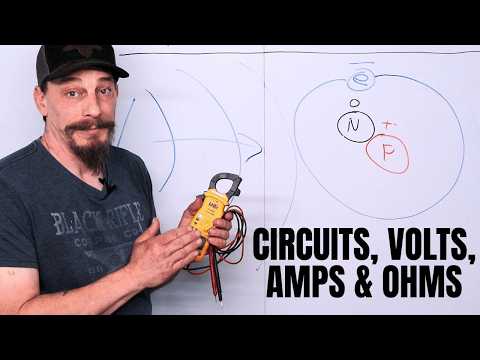
Circuits, Volts, Amps & Ohms
Start with what voltage, current, and resistance actually mean. Learn the parts of a complete circuit, the purpose of a load, and why these basics matter when interpreting meter readings.
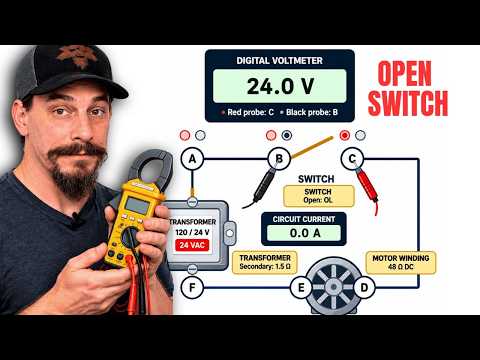
Learn how probe placement changes the meaning of a voltage reading. Practice with an interactive circuit, open and closed switches, and different circuit conditions.
Meter probesOpen circuitsVoltage readingsInteractive lab
Learn how to interpret resistance and continuity readings to evaluate electrical components, identify open circuits, and recognize excessive resistance. Apply those readings to practical HVAC troubleshooting scenarios.
ResistanceContinuityOpen circuitsDiagnostics
Coming Soon
⚙
More lessons are in development
New lessons and assessments will be added here as they're ready. Return to this page to continue the course.
Community Discussion
Share a thought, ask a question, or join the conversation. This is a general discussion space for the Jersey Mike HVAC community.
My Mission: Teaching Understanding, Not Memorization
The goal of Jersey Mike HVAC Electrical Training is simple: To help you understand electrical systems well enough to figure out equipment you've never encountered before.
As an HVAC technician, you're going to encounter equipment you've never worked on, wiring diagrams you've never seen, and electrical problems you haven't experienced before.
You can't possibly memorize every piece of equipment or every problem you'll encounter throughout your career.
But you can learn the electrical principles that make those systems work.
And that's what this course is designed to teach you.
Why This Course Is Different
I've always believed that complicated subjects can be made understandable when they're explained properly.
But understanding an explanation and being able to apply what you've learned are two different things.
That's why this course goes beyond video lessons.
Each lesson introduces electrical principles using plain English, practical demonstrations, and examples from real HVAC equipment.
Then comes the part I believe is especially important: putting that understanding to work.
Assessments That Actually Teach You Something
Most tests are designed to find out what you know.
I want these assessments to help you learn.
You'll encounter questions that require you to think through an electrical situation, interpret a measurement, or apply a principle you've just learned.
If you answer incorrectly, you won't simply receive a red X and move on.
Instead, you'll watch a short explanation showing you why the correct answer is correct and why the other choices aren't.
Then you'll get a second opportunity, but with a different question testing the same understanding.
That distinction matters.
I don't want you memorizing the answer to a particular question. I want you understanding the principle well enough to recognize it in an entirely different situation.
Even if you answer correctly the first time, the explanations are there to reinforce what you've learned.
The assessment isn't just something you take after the lesson. It's part of the lesson itself.
Where We're Headed
As the course progresses, we'll move from basic electrical circuits into the components, wiring, controls, and electrical sequences found in HVAC equipment.
Eventually, I want to put you in front of an HVAC system no one has ever seen before (Because I invented it from scratch).
You'll be given a sequence of operations, have to study its wiring diagram, understand how it's supposed to operate, interpret electrical measurements, and figure out why it isn't working.
Everything involved will be based on electrical principles you've already learned.
But the equipment itself will be unfamiliar.
Because that's what happens in the real world.
And if you can work through that challenge using your understanding instead of memorized troubleshooting procedures, then this course will have accomplished exactly what I set out to do.
The Bottom Line
I'm not trying to teach you everything there is to know about HVAC.
I'm trying to give you a solid electrical foundation that you can build on throughout your career.
I want you to finish a lesson understanding something you couldn't understand before.
And I want you to finish this course with the confidence to approach unfamiliar systems, learn how to identify familar principles, think through how they work and begin figuring out safe and practical ways to diagnose... Excatly what new HVAC Technicians often have to do out in the real world every day.
That's the mission.
— Jersey Mike HVAC
Designed for new HVAC technicians, apprentices, and anyone building a stronger foundation in residential HVAC electrical systems.

Share a thought, ask a question, or join the conversation. This is a general discussion space for the Jersey Mike HVAC community.